A Feeldwork Framework for engaging the More-Than-Human world

what is our grounded wisdom framework?
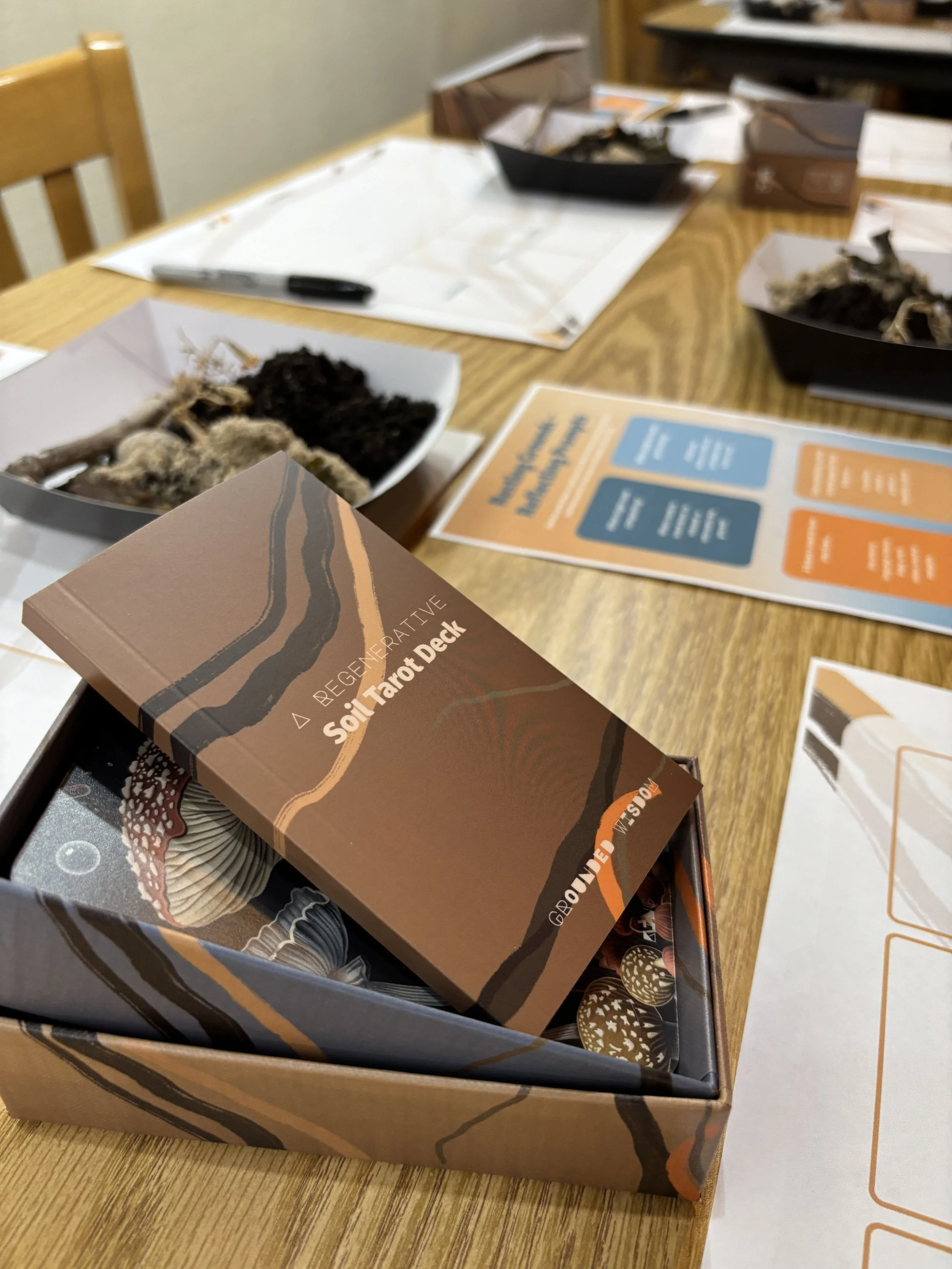
Grounded Wisdom is a Feeldwork Framework that uses soil, symbolism, collective reflection and creative facilitation to help people engage more deeply with the More-Than-Human world.
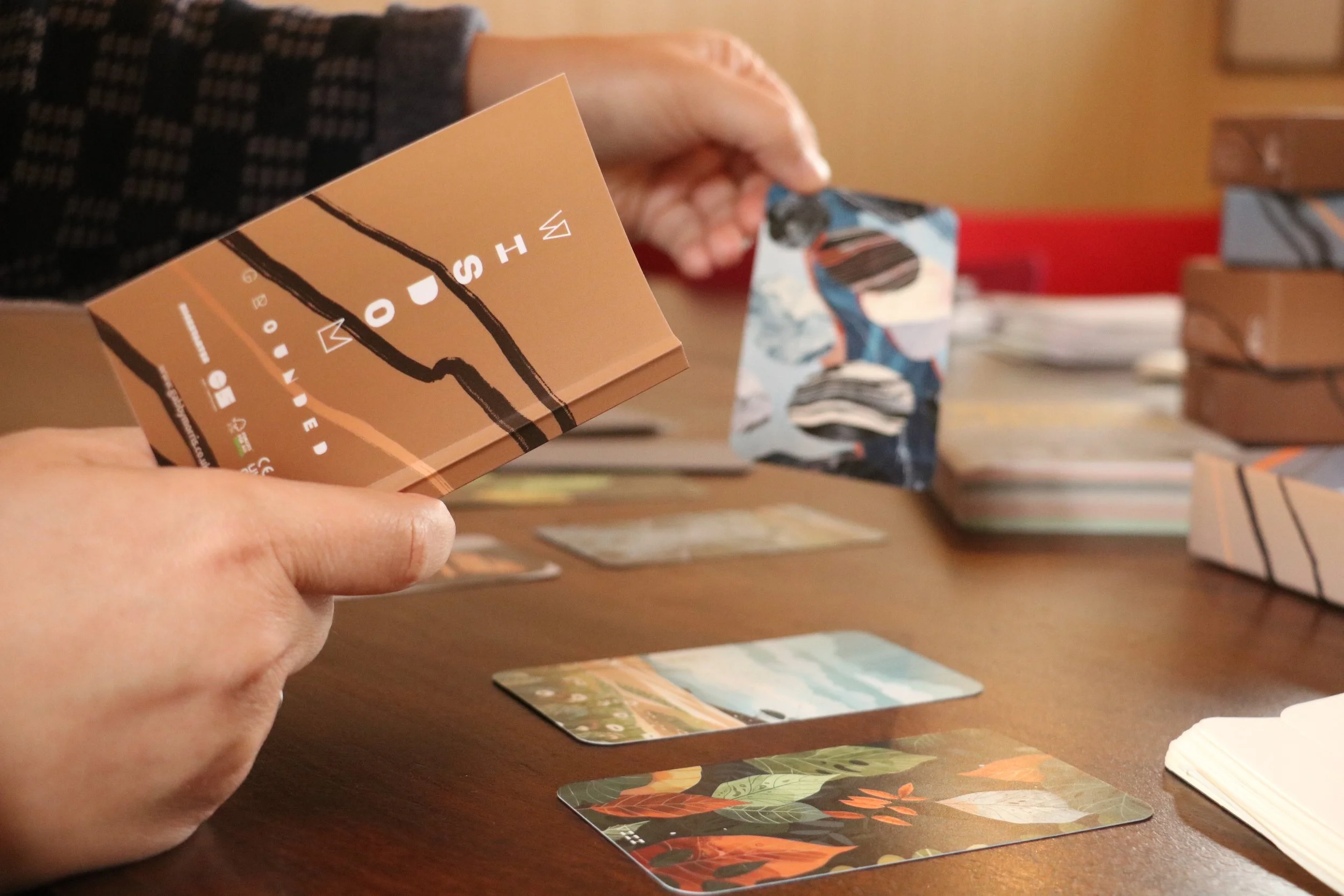
Rooted in a 78-card deck inspired by soil, ecology and regenerative thinking, the framework creates space for people to consider how human systems are shaped by, dependent on, and entangled with the wider living world. Through workshops, participatory experiences and facilitated reflection, Grounded Wisdom invites people to think with soil, life cycles and ecological relations rather than only about them.
It offers a way to move beyond extractive problem-solving and into more imaginative, relational and regenerative ways of understanding change.
❋ ECOLOGICAL THINKINGGrounded Wisdom invites participants to think with soil, cycles and the wider living world, opening up more relational ways of understanding change, care and interdependence.
❋ PARTICIPATORY REFLECTIONThrough prompts, card draws and shared discussion, the workshop creates space for people to reflect collectively, make meaning together and bring their own perspectives into the process.
❋ MORE-THAN-HUMAN PERSPECTIVESThe framework helps groups consider what shifts when we make room for the voices, needs and rhythms of the wider living world in how we imagine futures and make decisions.
❋ RADICAL IMAGINATIONBy stepping outside linear problem-solving, Grounded Wisdom supports slower, deeper and more imaginative engagement with climate, food systems, transition and regenerative futures.
ENGAGE DEEPLY WITH THE MORE-THAN-HUMAN WORLD
Much of our decision-making still centres human priorities alone, treating land, soil, water, species and ecosystems as backdrop, resource or afterthought. Grounded Wisdom offers a different approach.
Using the language of soil and ecological cycles, the framework creates ways for participants to consider what changes when we make room for more-than-human perspectives in how we imagine futures, shape systems and make decisions. It asks what it would mean to think with the living world as participant, teacher and condition, rather than passive setting.
This can open up rich conversations around:
interdependence and reciprocity
cycles of growth, rest, death and renewal
care, maintenance and regeneration
what human systems overlook or erase
how to design with ecological limits and relations in mind
what becomes possible when we shift from control to connection
In this sense, Grounded Wisdom can support workshops that function almost like a civic assembly for the more-than-human world: spaces where people are invited to reflect, listen, speculate and deliberate in ways that make ecological relations more present in the room.