
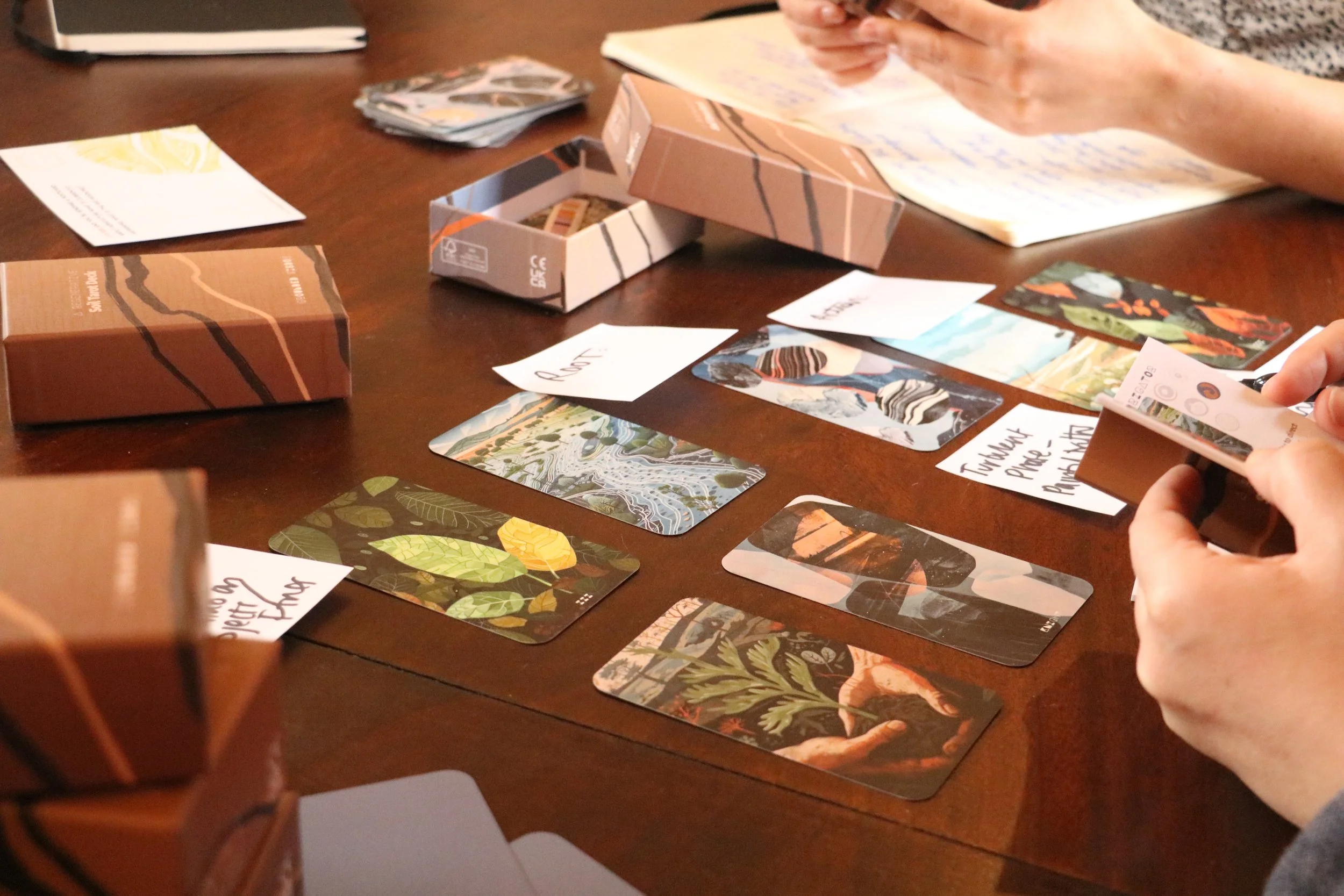
The soil has an opinion. We give it the floor.Most workshops about climate, land or ecology hand you a diagram of an ecosystem and ask you to feel inspired by it.
This one hands you actual soil.Grounded Wisdom is built around a 78-card deck drawn from soil, decay, growth and the cycles that run underneath every plan we ever make. No lectures on ecosystem services — participants draw a card, sit with what it asks of them, and argue about what it means for the thing they're actually trying to build.It's slower than a workshop with a neat agenda. It's also harder to forget — because it asks people to think with the living world, not just about it, and to notice what gets left out when only humans are in the room making the decisions.
Best suited to conversations about climate, food systems, land use, and any transition too big to fit on a single slide.A normal workshop is something you sit through. Ours are something you move through. We turn a room into a landscape, a table into a memory, a curriculum into an island you have to survive on.People don't leave our sessions with notes. They leave with a story they were actually inside of.
Before the enclosures, before the reservoirs and the sheep and the second homes, this land had a rhythm. People moved with their animals. Summer meant the high pasture — the shieling. Shieling meant butter. We built a workshop that let students feel that rhythm instead of reading about it.
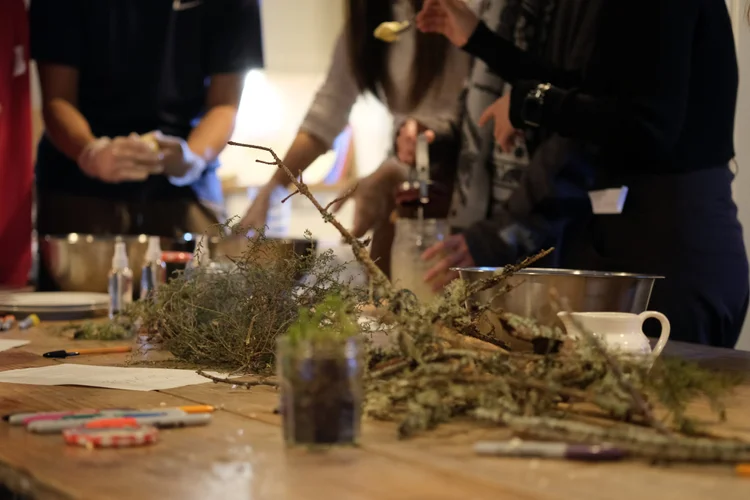
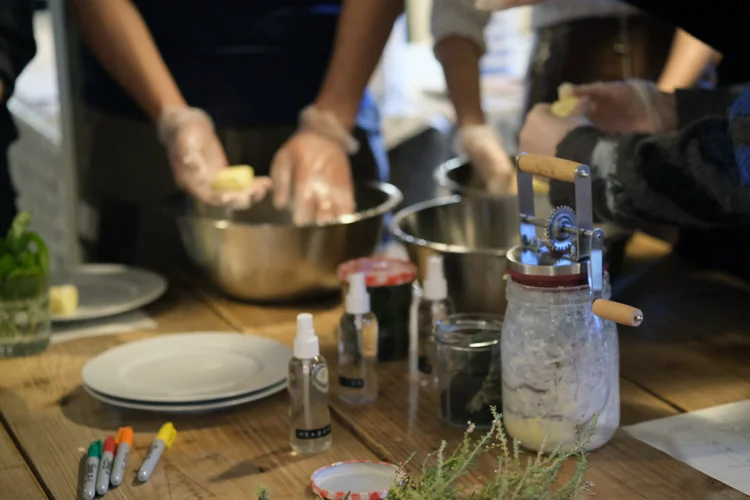
Not a lecture on transhumance and seasonal land-use. A room you could smell, touch and taste your way through.Participants churned their own butter with sorrel, oakmoss and yarrow seed. They ate warm bannocks. They breathed air laced with peat smoke and hawthorn charcoal, and moved through a space built to echo a journey herders once made on foot, season after season, for generations.By the time they'd made their first pat of butter, nobody in the room was thinking about "the shieling system" as an abstract idea anymore. They were standing inside it.
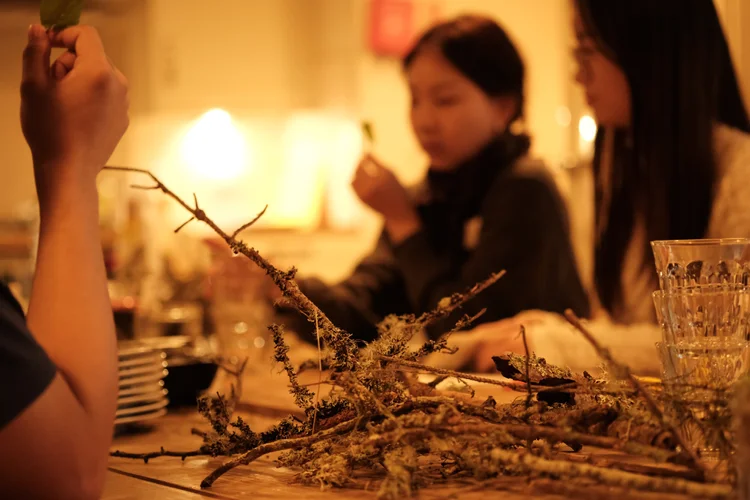
Smellscape: Earthy soil giving way to herbaceous meadow, then musty peat smoke and hawthorn charcoal, the same journey from lowland to high pasture, told entirely through scent.
Tastescape: Hands-on butter-making with native herbs, alongside bannocks and acorns; a taste of the past that participants made themselves, not one handed to them.
Spacescape: A shieling rebuilt in miniature, with tactile tablescapes people could actually touch. A space built to be walked through, not sat in.
Soundscape: Narrative storytelling that folded past and present together, so the history landed as something personal, not something academic.
Want something like this for a place, subject or piece of history?
What if we got it right?
Built for Education Scotland to bring Daydream Believers' Solarpunk Curriculum off the page. Not a presentation about a hopeful future. An island participants had to actually build one on. We've run two versions of this so far.
15-Minute City
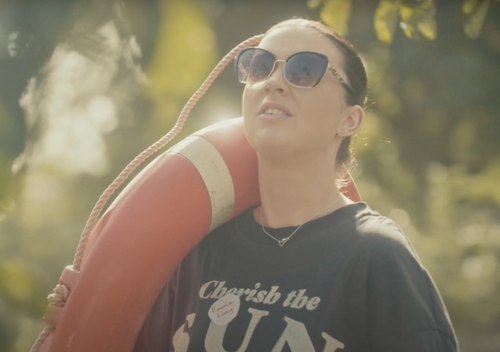
Participants become pioneers, crash-landed on an island with nothing but natural materials and a handful of Solarpunk-inspired objects scattered around their landing zone. In the time they've got, they design a "15-minute city" — a small, walkable, self-sufficient slice of a future that works: habitats, clothing, a flag, and a story explaining what kind of place this is and why it survived.
Human Board Game
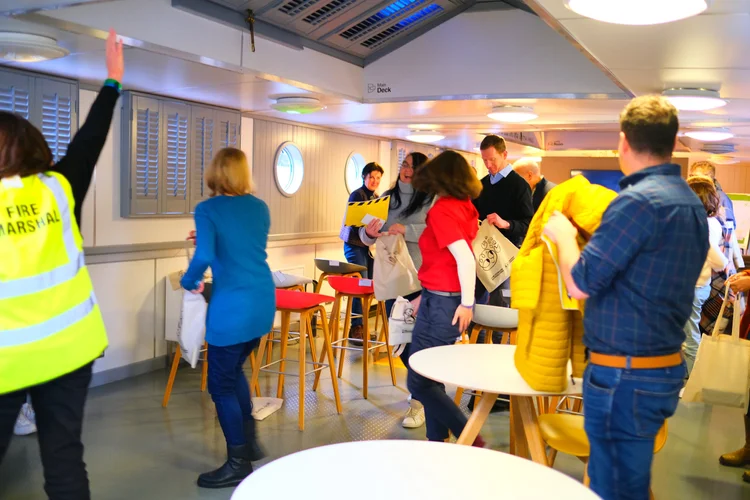
Run on the Highlands campus, this version turned the same premise into something closer to a live board game. Everyone arrived, "crash-landed," then opened an evacuation pack handing them a role, an island with its own habitats, challenges and hidden luxuries, and a set of resources — some given, some found scattered around the space. From there: build a Solarpunk future together, before time runs out.Both versions ask the same question through different mechanics: if we actually got the future right, what would it look like, and who would we have to become to build it?